
Please note: this is part 4 of a multi-part blog on embodied consciousness. (see BMS 1: Consciousness, BMS 2: Frequency, and BMS 3: Field-Matrix)
 Intro
Intro
The concepts of Heart-Brain Coherence and Heart Rate Variability (HRV) are fascinating areas of research that shed light on the intricate relationship between our physiological and psycho-emotional states. HeartMath Institute founders, Rollin McCraty and Maria A. Zayas, have explored the importance of measuring cardiac coherence—the degree of order, stability, and harmony in the oscillatory outputs of our regulatory systems. Their studies conducted across various populations, including returning soldiers with PTSD and individuals exposed to violent stimuli, show that lower levels of coherence are associated with increased aggression, physiological dysregulation, and psychological distress.
Traditionally, the heart has been understood primarily as a mechanical pump, following commands sent by the brain through neural signals. What is less commonly emphasized is that communication is not one-way—the heart actually sends more signals to the brain than the brain sends to the heart. This bidirectional exchange plays a central role in shaping brain function, perception, and overall well-being.
Research from the HeartMath Institute demonstrates that patterns of cardiac activity—closely linked to emotional states—directly impact cognitive and emotional function. Under stress or negative emotional states, heart rhythms become erratic and disordered. These incoherent patterns feed back to the brain, suppressing higher cognitive processes—affecting memory, learning, reasoning, and decision-making. This helps explain why, under stress, we tend toward impulsivity or reactivity—the brain is receiving disorganized input from the heart.
 When the heart and brain are in sync, the opposite occurs. We gain access to greater emotional regulation, clearer thinking, and improved capacity for relationships. This state—referred to as coherence—reflects a dynamic alignment between the central and autonomic nervous systems, with heart rhythms acting as a real-time mirror of emotional state.
Even more intriguing, positive emotional states can actively reset the body’s adaptive response, shifting us out of stress patterns and into a more ordered, resilient mode of functioning. Practices that increase cardiac coherence have been shown to improve emotional regulation, strengthen relationships, and support recovery from trauma.
During meditation and other mindfulness-based practices, coherence deepens further. Positive emotions have been associated with coherent heart states characterized by accelerated heart rates during inhalation and decelerated rates during exhalation. This suggests a close relationship between heart coherence, respiration patterns, and emotional states, which ultimately contribute to overall health and well-being.
Furthermore, research has shown that the heart communicates information to the brain and body through electromagnetic field interactions. The heart’s electromagnetic field—vastly stronger than the brain’s—acts as a carrier wave, distributing information throughout the body and contributing to systemic regulation.
This is more than an interesting discovery. It points toward a practical application: by learning to regulate this relationship between heart and brain, we directly influence our emotional state, cognitive function, and overall sense of coherence in daily life.
The Nervous System
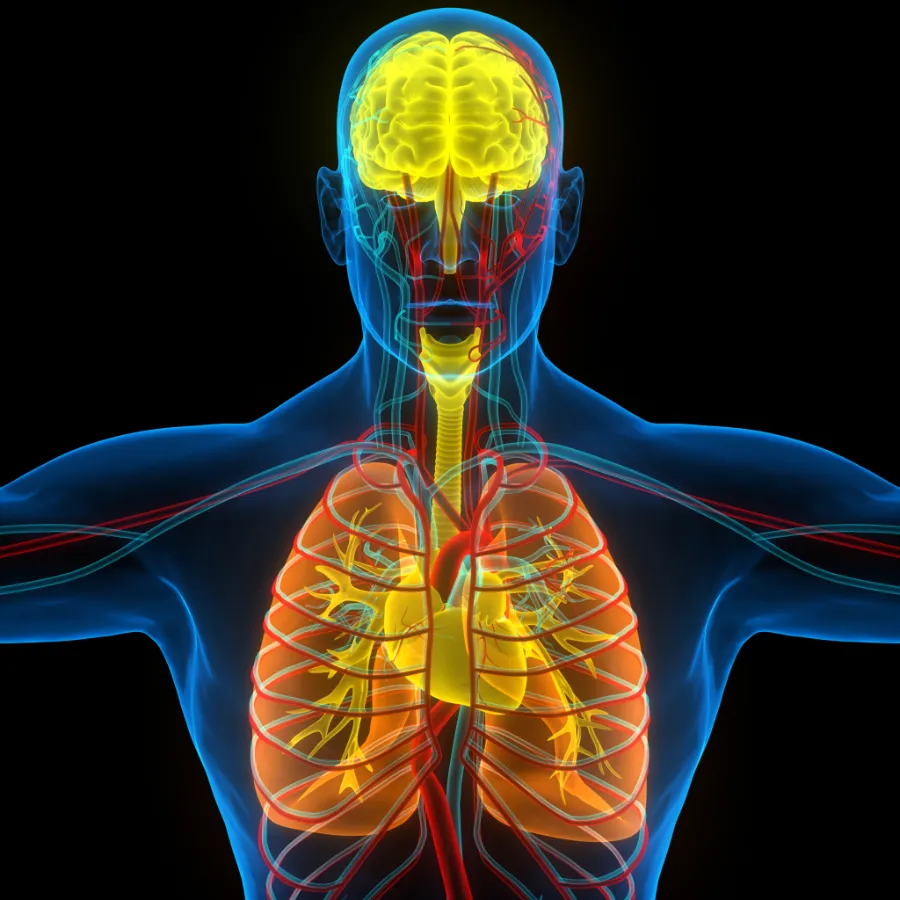
Our nervous system has two primary branches: the Central Nervous System (CNS) and the Peripheral Nervous System. The CNS functions to coordinate higher levels of thinking through the brain and spinal cord. On the other hand, the Peripheral Nervous System extends an intricate network of nerves out to all other parts of the body such as the heart, digestive organs, endocrine glands, and musculoskeletal system. The Peripheral Nervous System can be further subdivided into 2-branches: the Autonomic Nervous System (ANS, visceral organs) and Somatic Nervous System (musculoskeletal system).
The Peripheral Nervous System is further divided into the Somatic Nervous System (voluntary, musculoskeletal control) and the Autonomic Nervous System (ANS), which regulates visceral function.
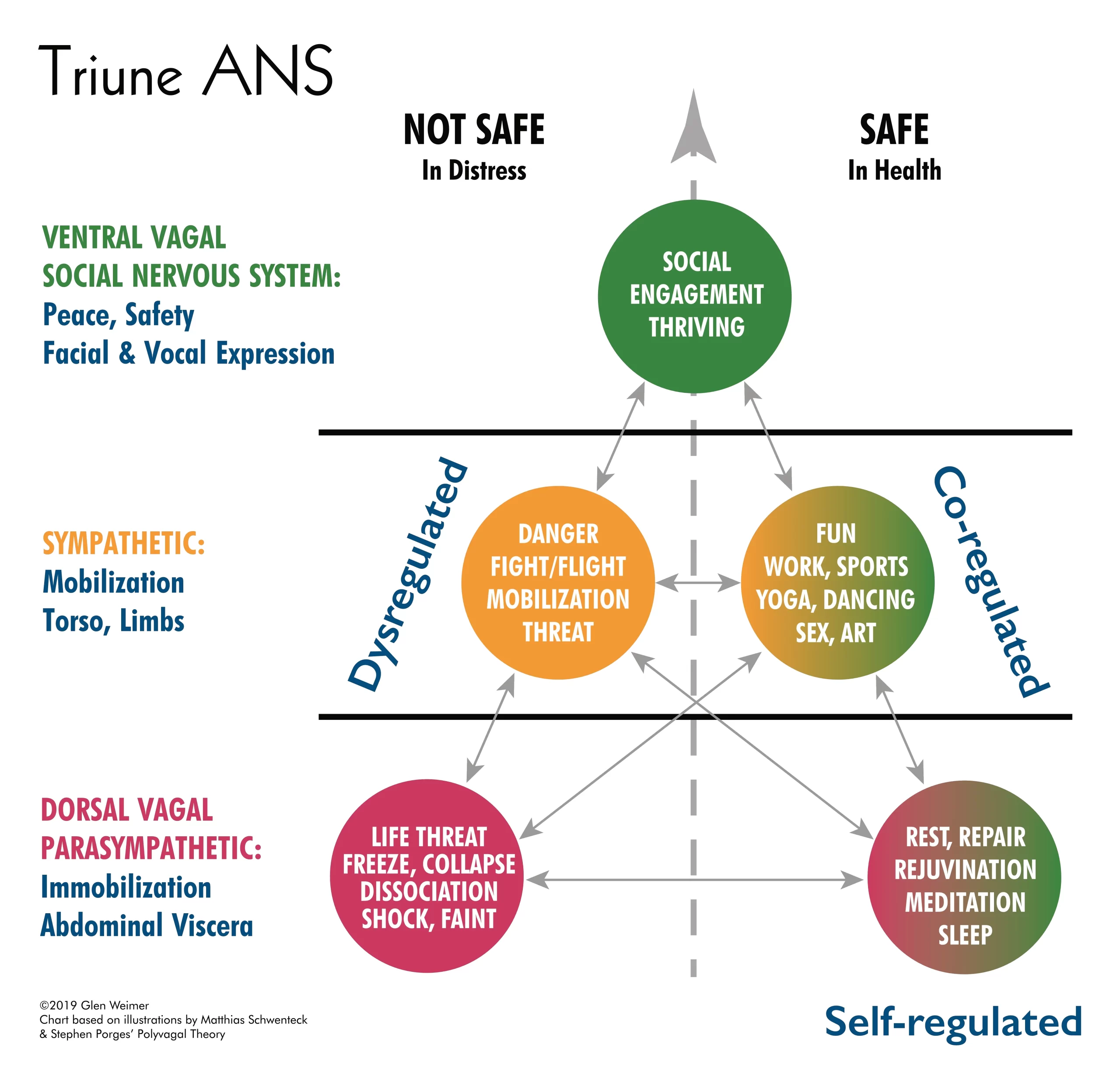
As discussed in previous blogs, emerging models of the ANS—particularly Polyvagal Theory—describe three functional branches:
- Ventral Vagal Complex (VVC): safety, connection, social engagement
- Sympathetic Nervous System (SNS): activation, mobilization
- Dorsal Vagal Complex (DVC): deactivation, immobilization
The Ventral Vagal system anchors our experience in a felt sense of safety, allowing for connection, relational engagement, and the capacity to move inward into reflective or meditative states.
When the VVC and SNS are co-regulated, we experience energized engagement—motivation, play, and goal-directed activity. When the Sympathetic system becomes dysregulated, it expresses as our fight-or-flight responses.
When the vagal systems are balanced, the body enters states of rest, digestion, repair, and restoration. When the Dorsal Vagal system becomes dysregulated, this can lead to collapse, shutdown, or freeze responses.
While the traditional two-branch model of the ANS is still widely taught, this three-branch model provides a more nuanced understanding of how regulation and dysregulation manifest in lived experience.
Heart Rate Variability
 One of the primary ways researchers assess autonomic regulation—particularly vagal influence—is through Heart Rate Variability (HRV), the variation in time between successive heartbeats.
These inter-beat intervals form oscillatory patterns closely linked to respiration. A healthy, well-regulated system exhibits greater variability, reflecting adaptability and resilience in response to internal and external demands.
Lower HRV, by contrast, indicates reduced regulatory flexibility and diminished vagal influence, often associated with chronic stress patterns and protective survival strategies.
Individuals with higher HRV demonstrate a greater capacity to filter non-essential information, regulate emotional responses, and adapt behavior appropriately to changing environments.
“There is compelling evidence to suggest that the physical heart is coupled to a field of information that is not bound by the classical limits of space and time.” ~ Rollin McCraty, Mike Atkinson, Raymond Trevor Bradley
Brain and Heart Connection
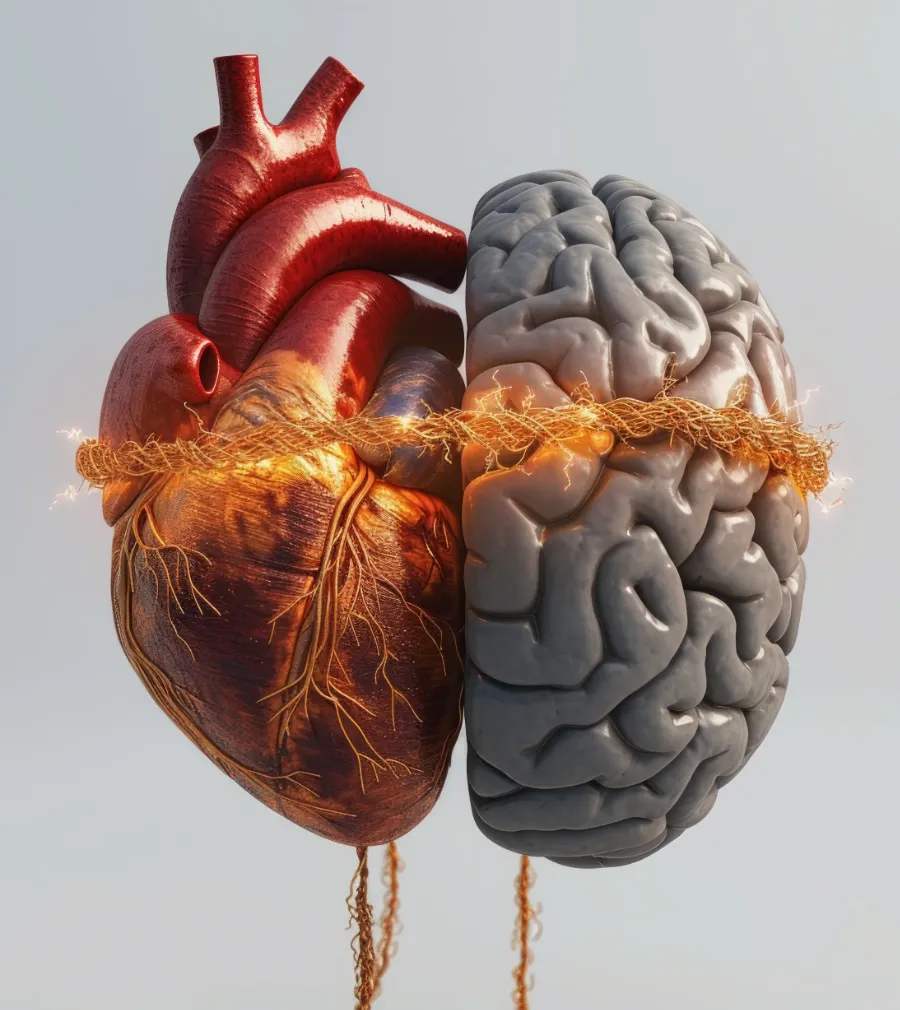
While the brain and heart are distinct organs, they do not function independently. The brain receives continuous input from the heart regarding physiological state, while also sending signals that modulate cardiac function.
This communication occurs primarily through the vagus nerve (slowing heart rate) and cardiopulmonary pathways (increasing heart rate), forming a feedback loop that influences emotional processing, stress response, and cognitive function.
The heart contains approximately 40,000 sensory neurites—often referred to as the “heart’s little brain”—capable of processing information independently. These structures influence brain activity, emotional regulation, and even decision-making processes.
“It became a point of fascination in the field—why does the heart need its own nervous system anyway? How does it help the heart function? It also became a potential target for the vagus nerve. Could a connection between the brain and the ‘little brain’ be the key to restoring heart health?
“Drs. Schwaber and Vadigepalli have been at the forefront of trying to answer these questions for the last 25 years, giving critical insight into the heart’s nervous system. In the last five years, serendipity brought them together with like-minded experts and advanced technology that allowed a major breakthrough: the first-ever 3D map of the heart’s ‘little brain.’ It is a map that gives an unprecedented look at not only how the neurons are organized in the heart—that undiscerning blob of yellow dots—but also their biological properties. For the first time, our researchers are able to appreciate the spatial and functional relevance of the heart’s neurons in keeping the organ healthy, giving us new clues about how to tackle the longstanding issue of heart disease.” ~ The Heart’s “Little Brain”, Karuna Meda, Thomas Jefferson University
HeartMath and Coherence
Research conducted by the HeartMath Institute suggests that the heart serves as an access point to a deeper level of intelligence—one that supports balance, creativity, and intuitive perception.
Over the past several decades, their work has examined the physiological mechanisms of heart–brain communication and the effects of cardiac activity on perception, emotion, and health. Their findings consistently show that heart coherence—an optimal physiological state—is associated with enhanced cognitive performance, emotional stability, self-regulation, and resilience.
Modern health science increasingly recognizes that health relies on the interrelationship of physical energy patterns related to our organs, behaviors, social interactions, and the environment. Albert Einstein’s theory of space and time, David Bohm’s concepts of underlying order, and Rupert Sheldrake’s ideas about morphogenic fields all point to this need. The implication is that for real progress in health and medicine, we must focus on coherence and conscious intention, particularly from the heart, which is linked to feelings of love, care, compassion, and appreciation.
Within this context, intention—particularly heart-centered emotional states such as care, compassion, and appreciation—plays a central role in regulating these systems. This understanding informed the development of the HeartMath system by Doc Childre in 1991.
 Research by Karl Pribram (holonomic mind/brain theory) has provided a scientific basis for many early HeartMath studies. A practical aspect of this research involves heart rate variability (HRV), which is vital for how we communicate, adapt, and maintain overall health. HRV can show us how our nervous system is functioning and how our heart and brain interact. It also connects us to the larger energy influences around us, such as the Earth’s magnetic field and cosmic activity, which can affect our consciousness and behavior.
“Coherence is the state when the heart, mind, and emotions are in energetic alignment and cooperation. It is a state that builds resilience.” ~ HeartMath Research Director Dr. Rollin McCraty
Coherence reflects stability and synchronization across multiple systems. In physiology, this appears as ordered heart rhythms and coordinated system activity. In human interaction, it supports communication, relational attunement, and collective regulation.
Notably, approximately 80–90% of vagal nerve fibers are afferent—carrying information from the body to the brain—highlighting the heart’s significant role in influencing neural processing.
Sustained positive emotional states generate what HeartMath refers to as psychophysiological coherence—a measurable state of optimal function in which mental clarity, emotional stability, and physiological efficiency are enhanced.
It is important to distinguish coherence from simple relaxation. As discussed in BMS 2: Frequency, relaxation is associated with Alpha brainwave states. Coherence, however, reflects a higher-order synchronization—seen in both brain and heart rhythms as smooth, sine-wave-like patterns.
Technologies such as emWave and Inner Balance allow for real-time measurement of this state.
Three key scientific theories support these findings:
- Resonance Theory: Synchronizing heart rate with breath enhances coherence.
- Polyvagal Theory: The Vagus nerve’s role in emotional regulation and social engagement.
- Neurovisceral Integration Model: Explains how vagal activity influences emotional and cognitive processes.
Heart Field
The heart plays a decisive role in our body, generating a field that influences everything within us. The signals it produces—like rhythm, heat, sound, light, pressure, electricity, and electromagnetic waves—are essential for regulating our body. Each part of the body receives these signals at different times, and they profoundly impact how we function.
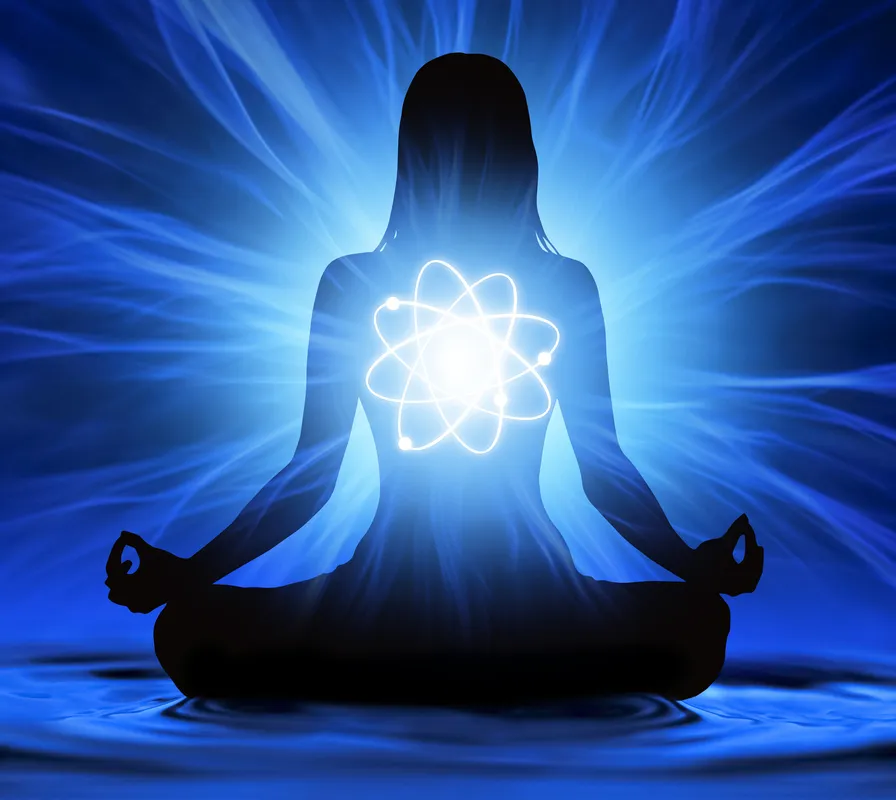 The heart’s energy field is the largest in the body, acting like a carrier wave that spreads information infused with emotional patterns. These emotions actually imprint themselves on the heart’s magnetic field. Positive emotions, like joy and gratitude, create smooth and ordered heart rhythms, while negative emotions lead to chaotic, incoherent patterns. More than simply the emotions, it is our felt-sense experience that impacts our entire internal state (see Chakras & Felt-Sense). When the heart’s rhythm is harmonious, it helps the brain sync up and enter a state of coherence as well.
What we experience as a pulse is the pressure wave generated by the heart, moving through every tissue and organ, influencing physiological rhythms—including neural synchronization within the brain.
Interestingly, the heart has its own mini-nervous system—its ‘Little Brain,’ complete with the ability to sense, feel, remember, and process information independently of the brain. It even has long- and short-term memory! And here’s a fascinating fact: the heart actually responds faster than the brain. It receives and processes information first, then sends that information to the brain.
This suggests that we experience life first through our emotions—our felt-sense and Autonomic Nervous System (ANS)—before the brain analyzes and creates a story about what’s happening. As therapist Deb Dana puts it, “Story follows state.” In other words, how we feel shapes the way we interpret the world. What’s more, the most unbelievable part to me is that the ‘electrophysiology of intuition’ demonstrates that the heart responds in advance (precognitively) to a stimulus that is emotionally significant and relevant to an individual.
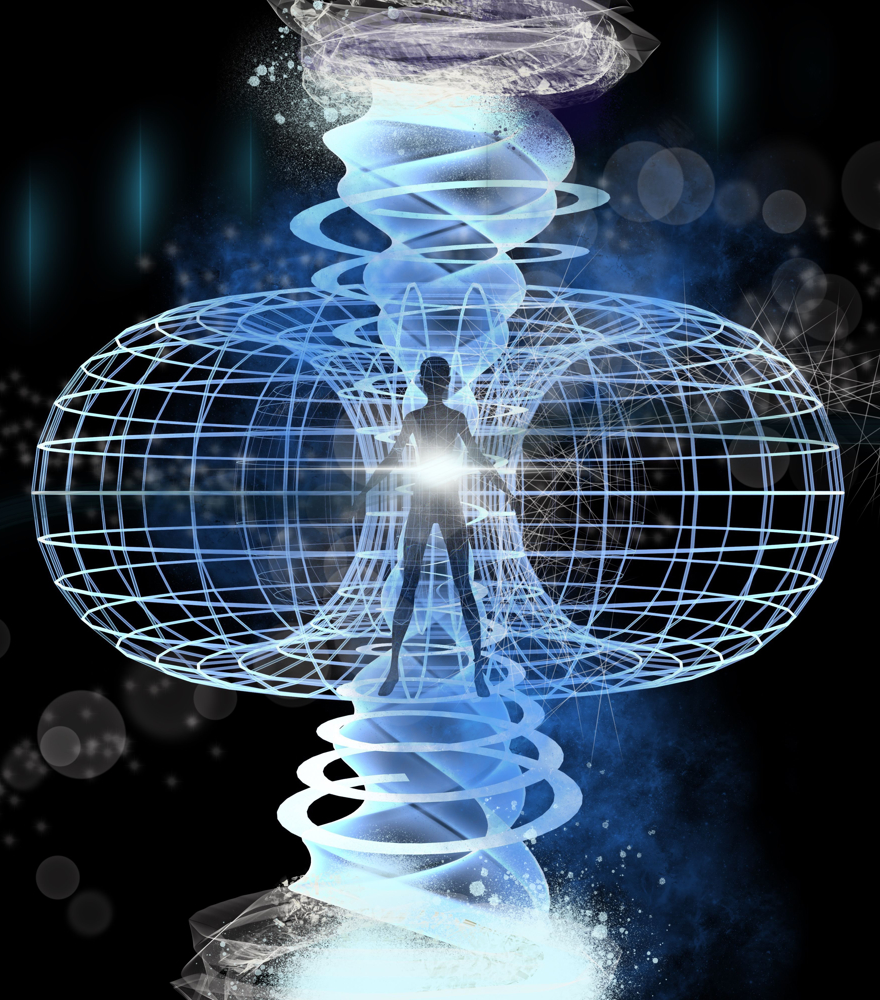
HeartMath research finds that the human body’s electrical activity can be detected and measured through an electrocardiogram (ECG), which records the electrical field present on the surface of the body. However, beyond its electrical influence, the heart also generates a powerful magnetic field—one that is more than 100 times stronger than the field produced by the brain. This magnetic field extends in all directions and can be detected up to 91 cm (or 3 feet) away from the body using highly sensitive superconducting quantum interference (SQUID)-based magnetometers.
Interestingly, the heart’s magnetic signals, measured through magnetocardiograms (MCG), closely parallel the electrical signals recorded by ECG. This suggests a deep and intricate connection between the heart and the brain, as heart neurons (neurites) fire in synchrony with brain activity. This interrelationship implies that the heart is not merely a mechanical pump but also a dynamic component of the nervous system, influencing and responding to cognitive and emotional states.
Moreover, the human nervous system functions as a highly sensitive antenna, capable of detecting and responding to the magnetic fields generated by the hearts of others. This suggests that interpersonal connections may extend beyond verbal and physical communication, operating at an electromagnetic level. The ability of our nervous systems to attune to each other’s heart-generated magnetic fields may play a crucial role in emotional bonding, social interactions, and even the regulation of physiological states within groups and relationships.
 HEART FIELD EXPLORATION:
Try this simple exploration to experience Coherence in your body. Body-consciousness orients to rhythmic oscillation. This exploration uses these rhythms of motion to orient to the health of the system, creating a coherent heart field.
In a relaxed, comfortable seated or lying position, bring your awareness first to your breath. Allow it to become slow, full, and measured. Now, bring your attention to your heart-space in the center of your chest.
- How does it feel in there?
- What is your felt-sense?
How are you experiencing that in your body? - Is this a pleasant or unpleasant feeling?
- Is there a word or words that encapsulate your whole experience of this right now?
- If this a pleasant experience, skip to #3
- An unpleasant felt-sense is often accompanied by sensations of contraction, depression or downward motion, unsettled feelings, agitation, shakiness, or the like.
- Rather than opposing it, allow your awareness to follow that impulse/motion in the direction that you are experiencing.
- Take it further in that direction and hold it there until IT is ready to move.
- Be with those sensations and know they are just SENSATIONS, no matter how big or bad they may feel.
It may feel worse before it feels better, but remember, you are in control of this process. - Now, release that and see if it can move in the opposite direction.
- At first, this may bring up unpleasant memories or sensations. Stay with the sensations and movement or holding rather than going into the story.
- What direction is it moving now? Can it move freely in opposing directions? In other directions?
- Repeat this process until you experience a positive (or more positive) felt-sense of your heart-space.
- If there is no change after repeated attempts, try a different direction.
- A pleasant felt-sense is often accompanied by an upward, expansive, bubbly, joyous sensation or the like.
- Is there a word or words that encapsulate the whole of this experience?
- Is there a color or colors that you associate with this feeling?
- Move that color or colors through your heart-space, then your whole body.
- Allow yourself to REALLY FEEL these positive feelings.
- Allow it to expand the space to fill your whole chast cavity.
- Allow it to expand to fill your whole body. Notice if it expands beyond your body and how far.
Continue reading in Body-Mind-Spirit 5: Direction
Disclaimer:
The information featured on this site is provided for information and education purposes only and is not intended to replace the advice of your doctor or health care provider on medical and/or health-related issues.
You should not use the information on this site for diagnosis or treatment of any health problem or as a substitute for medication or other treatment prescribed by your physician or health care provider.